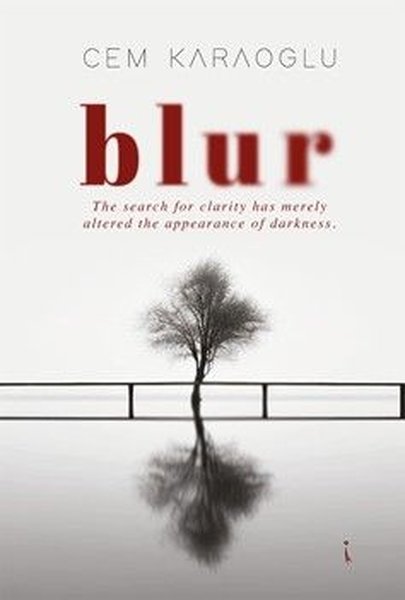

BLUR
An Inquiry into the Philosophy of Uncertainty
One of modernity's most enduring illusions is the belief that the accumulation of knowledge inevitably diminishes uncertainty. History tells a different story. Every scientific breakthrough has done more than provide new answers; it has also exposed questions whose existence we had never previously suspected. We have measured the cosmos, begun to decipher the biology of consciousness, and developed algorithms capable of anticipating human behavior with astonishing precision. Yet the oldest questions have remained remarkably intact. How should one live? Why do we exist? What is truth? Rather than dissolving under the weight of progress, they have become increasingly intricate.
BLUR emerges from this tension.
This book does not attempt to construct another philosophical system promising certainty. Humanity has been pursuing that ambition for more than two millennia. Plato's realm of Forms, Descartes' search for indubitable foundations, Kant's critical limits of reason, Hegel's vision of absolute synthesis, and the confidence of positivism each believed, in its own way, that it could illuminate the darkness of its age. Time, however, has repeatedly demonstrated that no intellectual architecture has ever succeeded in eliminating uncertainty. The history of thought may ultimately be understood as the history of failed projects of certainty.
truth, visibility eclipses substance, and immediacy often replaces reflection. The post-truth condition is no longer confined to politics; it has become one of the defining characteristics of everyday existence. Social media circulates conviction more rapidly than thought, while algorithms are increasingly designed not to confront us with reality but to reinforce what we are already inclined to believe. Wittgenstein's reflections on the limits of language and Derrida's exploration of deferred meaning no longer belong solely to philosophy seminars; they have become recognizable features of ordinary experience.
Perhaps the central problem of our age is no longer access to knowledge, but the disappear-ance of any stable ground upon which knowledge itself can confidently stand.
BLUR does not attempt to reconstruct that ground.
Instead, it asks why it keeps slipping away.
Across its pages, the reader encounters reflections on nihilism, skepticism, identity, morali-ty, loneliness, failure, time, death, desire, truth, language, and the fragmented conscious-ness of modern existence. Yet these inquiries never aspire to become a closed philosophical system, because existence itself refuses such coherence. Contradictions are often not obsta-cles awaiting resolution but intrinsic conditions of being. The anxiety of Kierkegaard, Nie-tzsche's genealogy of values, Heidegger's question of Being, and Cioran's radical pessi-mism appear here not as authorities to be repeated, but as intellectual landscapes from which new investigations begin.
For this reason, BLUR is not a book seeking agreement. It neither comforts nor reassures, nor does it promise intellectual refuge. Instead, it returns to concepts that have long es-caped careful examination. It asks not why truth remains desirable, but why it has become so easily imitated. It explores how morality can function not only as a source of virtue but also as an instrument of concealment; how identity may be less an enduring essence than a continuously rewritten narrative; and why modern individuals, despite being surrounded by unprecedented explanations, often find themselves increasingly estranged from meaning itself.
Perhaps thought truly begins only when answers cease to satisfy the questions that produced them.
This book stands precisely at that threshold.
BLUR was written for readers who are less interested in escaping uncertainty than in learn-ing how to think within it. For there are moments when intellectual growth no longer de-pends upon discovering new certainties, but upon witnessing the quiet dissolution of old ones. If these pages leave the reader not more convinced, but more attentive to the fragility of conviction itself, then they will have fulfilled their purpose.
Press Release
BLUR
Cem Karaoglu
(Tanıtım Bülteninden)
BLUR
An Inquiry into the Philosophy of Uncertainty
One of modernity's most enduring illusions is the belief that the accumulation of knowledge inevitably diminishes uncertainty. History tells a different story. Every scientific breakthrough has done more than provide new answers; it has also exposed questions whose existence we had never previously suspected. We have measured the cosmos, begun to decipher the biology of consciousness, and developed algorithms capable of anticipating human behavior with astonishing precision. Yet the oldest questions have remained remarkably intact. How should one live? Why do we exist? What is truth? Rather than dissolving under the weight of progress, they have become increasingly intricate.
BLUR emerges from this tension.
This book does not attempt to construct another philosophical system promising certainty. Humanity has been pursuing that ambition for more than two millennia. Plato's realm of Forms, Descartes' search for indubitable foundations, Kant's critical limits of reason, Hegel's vision of absolute synthesis, and the confidence of positivism each believed, in its own way, that it could illuminate the darkness of its age. Time, however, has repeatedly demonstrated that no intellectual architecture has ever succeeded in eliminating uncertainty. The history of thought may ultimately be understood as the history of failed projects of certainty.
truth, visibility eclipses substance, and immediacy often replaces reflection. The post-truth condition is no longer confined to politics; it has become one of the defining characteristics of everyday existence. Social media circulates conviction more rapidly than thought, while algorithms are increasingly designed not to confront us with reality but to reinforce what we are already inclined to believe. Wittgenstein's reflections on the limits of language and Derrida's exploration of deferred meaning no longer belong solely to philosophy seminars; they have become recognizable features of ordinary experience.
Perhaps the central problem of our age is no longer access to knowledge, but the disappear-ance of any stable ground upon which knowledge itself can confidently stand.
BLUR does not attempt to reconstruct that ground.
Instead, it asks why it keeps slipping away.
Across its pages, the reader encounters reflections on nihilism, skepticism, identity, morali-ty, loneliness, failure, time, death, desire, truth, language, and the fragmented conscious-ness of modern existence. Yet these inquiries never aspire to become a closed philosophical system, because existence itself refuses such coherence. Contradictions are often not obsta-cles awaiting resolution but intrinsic conditions of being. The anxiety of Kierkegaard, Nie-tzsche's genealogy of values, Heidegger's question of Being, and Cioran's radical pessi-mism appear here not as authorities to be repeated, but as intellectual landscapes from which new investigations begin.
For this reason, BLUR is not a book seeking agreement. It neither comforts nor reassures, nor does it promise intellectual refuge. Instead, it returns to concepts that have long es-caped careful examination. It asks not why truth remains desirable, but why it has become so easily imitated. It explores how morality can function not only as a source of virtue but also as an instrument of concealment; how identity may be less an enduring essence than a continuously rewritten narrative; and why modern individuals, despite being surrounded by unprecedented explanations, often find themselves increasingly estranged from meaning itself.
Perhaps thought truly begins only when answers cease to satisfy the questions that produced them.
This book stands precisely at that threshold.
BLUR was written for readers who are less interested in escaping uncertainty than in learn-ing how to think within it. For there are moments when intellectual growth no longer de-pends upon discovering new certainties, but upon witnessing the quiet dissolution of old ones. If these pages leave the reader not more convinced, but more attentive to the fragility of conviction itself, then they will have fulfilled their purpose.
Press Release
BLUR
Cem Karaoglu
(Tanıtım Bülteninden)
| Taksit Sayısı | Taksit tutarı | Genel Toplam |
|---|---|---|
| Tek Çekim | 264,60 | 264,60 |

-
%37İNDİRİM250,00TL 157,50TL
-
%37İNDİRİM300,00TL 189,00TL
-
-
%37İNDİRİM900,00TL 567,00TL
-
%37İNDİRİM300,00TL 189,00TL
-
-
%37İNDİRİM500,00TL 315,00TL
-
-
-